Supported by:


Following the success and strong interest in the Flystrike field lab, we're excited to launch a new field lab learning network on this topic. This will create space for sharing experiences, ideas and practical solutions, while supporting fresh on-farm research to build knowledge and improve understanding and practices.
As part of the learning network we will be inviting farmers to take part in trials, as well as drawing experiences and learnings from others around the country.
Or for more information contact the Group Coordinator Lynnie Hutchinson: iandlhutchison@talk21.com
Building on the Flystrike field lab, this field lab learning network will support farmers to explore a whole‑health, integrated approach to pest management. The original trial showed that a graded scale of natural preventatives, backed by a decision‑tree, can work effectively across many flocks, with natural treatments also performing well on existing strike patches. The Learning Network expands this work to help farmers reduce routine chemical use, while sharing real‑world experience of natural alternatives.
We're grateful to the Rothschild Foundation for funding this learning network.
2026: A season that's keeping shepherds on their toes
From Sussex to Aberdeenshire, members of the Flystrike Learning Network have been reporting one clear message: this has been a challenging season. While fly pressure has varied across the country, the conversations have been rich with practical ideas, observations and on-farm experiences that are helping shape a more integrated approach to flystrike management.
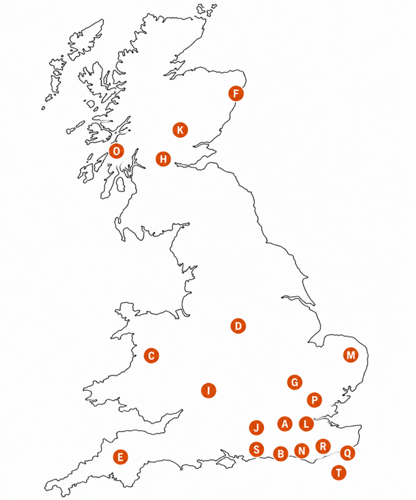
If you've been feeling like the flies have been particularly relentless this summer… you're definitely not alone. Farmers from England, Scotland and Wales have described a slow, cool spring followed by warm, humid weather creating ideal conditions for blowflies.
🐑 Five things we're learning so far
1. It really is a difficult flystrike year
Members from across England, Scotland and Wales are reporting high fly pressure. Although every farm is different, many have experienced weather patterns that have created ideal conditions for blowflies.
2. Prevention isn't just about what you spray
One of the strongest themes emerging is that flystrike management starts long before products are applied. Farmers are increasingly discussing nutrition, worm burdens, foot health, grazing management and overall flock resilience alongside product choice.
3. Woodland isn't the whole story
Many participating farms have woodland edges and abundant wildlife, yet flystrike pressure has varied considerably. This reinforces the idea that landscape is only one part of a much bigger picture.
4. Small practical changes matter
The WhatsApp discussions have generated dozens of practical ideas—from easier application methods to timing treatments around weather and handling—that members are already putting into practice.
5. Nobody is farming alone
Perhaps the biggest success has been farmers helping farmers. Sharing real-time observations and experiences has helped members make informed decisions during a particularly challenging season.
One size definitely doesn't fit all
One of the biggest messages emerging so far is that every farm is different. Some members are seeing very little flystrike, while others have experienced significant pressure. Even neighbouring farms have reported different experiences depending on weather, grazing, flock health and local conditions. Rather than looking for a single 'magic bullet', many farmers are increasingly thinking about flystrike as part of a much bigger system.
It's not just about the flies…
One of the most interesting discussions this season has been around whole flock health. Several farmers have noticed that sheep recovering from issues such as worm burdens, coccidiosis, foot problems or scald often seem more vulnerable to flystrike. Good nutrition, mineral balance and regular observation have all featured heavily in discussions alongside the choice of preventative products.
Learning together
Amongst our core farmers topics generating the most discussion include:
To further explore and share the processes involved in the prevention and treatment of flystrike using natural alternatives to the commonly used chemical products following on from the 2025 field lab. To support approximately 20 farmers trialling the natural approaches directly with a trial group and a larger number of farmers indirectly with a knowledge sharing and feedback network, in addition a small number of the farmers will research and trial the creation of a tea tree mix to spray on in a conventional method/ speed as a preventative.
Health and welfare implications for sheep, shepherd, shearers, and processors are currently not well considered, the lack of knowledge of data sheets and the need for personal protective clothing when using the current chemicals or when handling sheep many weeks after application, are not Widley known or considered, current industry usage does not reflect the practical needs or reality of shepherding sheep. Data sheet recommendations are leading to questions whether the current chemicals are fit purpose. The decrease in fleece value following blow fly attack, the lower value of chemically sprayed fleece, and the effect of these chemicals on soil biota and water sources coupled with increasing resistance and new guidance from the BVA make this a vital subject for further trials, research and knowledge sharing.
Blowflies are ‘the most widespread ecto-parasite affecting sheep in the UK with surveys showing that every year 80% of flocks will have 1 or more cases of strike’ (SCOPS – Sustainable Control of Parasites) Figures from 2015 suggests blowfly strike costs the sheep industry £2.2 million per year. NADIS./ELANCO The National Animal Disease Information Service this field lab would have UK wide relevance.
To trial the natural approach and risk-based decision framework that was developed through the 2025 field lab across a wider group of 20 farmers to determine ease of approach adoption across a wide variety of farming systems. The framework provides a graduated intervention strategy with conventional chemicals reserved as a last resort, meaning farmers are able to respond proportionally to risk, reducing unnecessary chemical use and its associated economic and user costs. The trial will assess how farmers apply the framework and the success of the approach in meaningfully reducing reliance on non-targeted application of conventional chemicals.
For the original field lab farmer cohort we will look to expand the promising lab research on tea tree oil at 3 percent (preventing blowfly egg laying for 44 days- the use of essential oils in veterinary ectoparasite control L Ellse and R Wall) on to real farm situations by producing a mix that will spray using conventional method and at conventional speed, and hold the mix on fleece for 4 weeks as a preventative whilst recording its efficacy.
To spread the knowledge and techniques gain so far onto a wider network of farmers so they can be aware of the alternatives and have a true choice in what they use for their fly strike prevention and treatment. Alongside raising awareness of the data sheet requirements of current chemical options and the issues that brings in practical farming situations. Alongside promoting farmer safety, the new BVA guidance now recommends ectoparasiticides are used as a medicine of last resort, making this work both timely and extremely relevant to day-to-day on-farm practices. On farm events, webinars and talks at farming events will help raise awareness of the issues and disseminate knowledge on the alternative approaches that exist to give a true choice to shepherds that is practical and economically viable.
This field lab will use a pragmatic, farmer-led, prospective cohort design, reflecting the diversity and complexity of UK sheep farming systems. Twenty participating farmers will use the decision-support framework (2025 field lab) to develop their own farm-specific protocols, drawing on a range of complementary natural intervention options for flystrike prevention and treatment. Because management systems, flock types, farm layouts and environmental conditions vary widely, protocols will not be standardised across farms, likewise within farms protocols may shift over the course of the season as sheep groups are moved, merged, or managed differently in response to changing conditions. This adaptive approach to framework application is central to the study: understanding how farmers develop, apply, and refine risk-based intervention protocols in real-world conditions is itself a key research question.
Where possible, sheep on each farm will be grouped for analysis into defined cohorts (for example, group definitions such as lambs, fattening lambs, breeding ewes, hill sheep may be used) as the primary unit of observation, though it is acknowledged that cohort boundaries may change during the season as stock is moved and mixed. A core dataset will be collected across all cohorts, including cohort size and type, breed, interventions applied and timing, incidence of flystrike, severity of any cases, use of escalating treatments (including chemical interventions), and associated labour and product costs. Farmers will likely report any suspected strike incidence within an estimated time-window of last inspection rather than an exact date, reflecting realistic shepherding practice; this will be accounted for in analysis. We do not expect data on individuals, although requests for more data may be made of individuals suffering strike.
Baseline and contextual risk factor data will also be recorded for each farm and, where relevant, each cohort. This will include factors known or suspected to influence blowfly pressure, including proximity to carrion sources such as roadkill or shooting activity, field characteristics, flock density, presence/absence of other livestock, and weather conditions through the season. Capturing this information will support more detailed interpretation of variation in outcomes between farms and between years.
A nested, opportunistic controlled comparison will be conducted on five farms to evaluate a 3% tea tree oil preventative spray strategy. Where feasible, comparable flock cohorts will follow a decision-led approach based on the existing framework, incorporating homeopathic prevention then be divided into (1) a scheduled preventative application of 3% tea tree oil at approximately four-week intervals, and (2) other natural spray option (comparator group).
Where feasible, cohorts will be allocated approximately equally (1:1) between approaches to maximise the precision of effect estimates, with up to 2:1 allocation in favour of the scheduled tea tree treatment where cohort size or practical considerations require. Allocation will be undertaken within flock, with groups selected to be as comparable as possible in terms of sheep age structure, breed type, management, and environmental risk. Given the low incidence of cases requiring chemical intervention observed in the 2025 field lab (two instances across all farms), formal statistical comparison of chemical treatment rates is unlikely to be achievable in a single season; instead, these will be reported descriptively. Outcomes will include flystrike incidence (if any), application of additional intervention layers, reasons for escalation, and farmer-assessed duration of protection.
As the study progresses, based on wider research and veterinary consultations, the possible trial of ointments of sulphur and pyrogen on any strike patches alongside the tea tree and blow fly repel options may be explored.
Animal welfare takes precedence over protocol at all times. Any farmer may move animals out of a comparison group or apply additional treatment at any point if they judge this necessary, without this affecting their participation in the study. In addition, routine farm management practices, such as sheering, movement, regrouping, or mixing of sheep, will continue as normal and not be restricted. Such changes will not result in exclusion from the study and will be recorded and incorporated into the analysis as part of the real-world management context. All deviations from initial group allocation, whether due to welfare decisions or standard management practices, will be recorded and treated as informative data.
Where unusual or unexpected patterns of strike or larval behaviour are observed, these will be investigated further. In particular, any atypical presentations (such as the presence of fully developed larvae high in the fleece with no skin damage, as noted in the 2025 field lab) will be followed up by collecting samples. Larvae will be reared through to adult flies for morphological identification by Dr Jess Stokes (FRES), and/or preserved for molecular screening through her wider research network. This will help determine whether observed differences relate to treatment effects or to the presence of emerging fly species (such as Wohlfahrtia magnifica), adding an important surveillance dimension to the study. If outbreaks of non-endemic species are confirmed this would be suitably escalated and reported through appropriate veterinary and regulatory channels.
Data will be collected through farmer-reported observations including WhatsApp messages and video where appropriate, as well as direct questions. This is to reduce the time burden and effort for reporting. Responsibilities for data collection and reporting will be agreed with the group to ensure the workload is realistic alongside normal farming commitments. In addition to the 20 farmers enrolled in the study an extended network of interested farmers will also be invited to feed in their experiences which will be qualitatively explored.
Analysis will combine qualitative and quantitative approaches. Quantitative analysis will include descriptive statistics, within-farm comparisons, and cohort-level longitudinal analysis were valid. Where sample sizes permit, exploratory mixed-effects models will be used to account for clustering by farm, with farm included as a random effect; fixed-effect models will be explored in sensitivity analyses. For the nested 3% tea tree comparison, risk ratios and incidence rate comparisons will be used where data allow.
In addition, changes in chemical use will be quantified at farm and cohort level, including comparison of the number of animals treated, frequency of application, and total product use relative to typical farm practice, to estimate the potential reduction in chemical inputs over the study period.
Qualitative data will be analysed thematically to capture farmer experience, decision-making processes, and barriers and enablers to adoption of a risk-based intervention approach. Given expected variability in cohort size and event rates, emphasis will be placed on estimation of effect sizes and confidence intervals rather than formal hypothesis testing.
This design balances methodological transparency with real-world applicability, generating practice-relevant evidence on the effectiveness, usability, economic implications, and biological context of graduated, risk-based flystrike management.
The first meeting of the Learning Network was hosted by Coordinator Lynnie Hutchinson and Collaborating Coordinator & Researcher Dr Jessica Stokes.
March 2026
Join farmer Lynnie Hutchison for an insightful webinar sharing findings and best practice from the Innovative Farmers Field Lab exploring a graduated approach to natural fly strike prevention and treatment in sheep. Results showed that natural products can be highly effective, helping farmers reduce chemical exposure without compromising welfare. This webinar also shows how a whole health integrated approach can be applied to other pests and parasites. Webinar will be recorded.
Watch the webinar here: Webinar | Fly Strike Trial Q&A - Zoom
16th April 2026

Brickpits Farm
East Sussex
Lynnie farms at Brickpits Farm, on organic mixed family farm in East Sussex. The farm produces organic beef and lamb for direct sales to customers and grow arable crops to support these enterprises. They have a Hereford beef suckler herd with two calvings a year and they lamb 150 ewes outside in April, a mix of Suffolk, Texel, and Lleyns. The farm has some permanent pasture and some arable land in rotation.

ProScience Ltd
