Context
Plastic net wrap and twine are the conventional materials used to bale grass forage (e.g. hay) and straw. However, these plastics can enter soil, water and food chain environments through fragmentation, operational errors and poor waste management practices. They can also pose a risk to livestock if accidentally ingested. Before plastic net wrap became widely available, farmers commonly used sisal twine, a natural fibre product. As a biodegradable material, sisal could offer a more sustainable alternative to plastic baling products. Sisal fibre is primarily grown in South America and Africa.
Trial Design
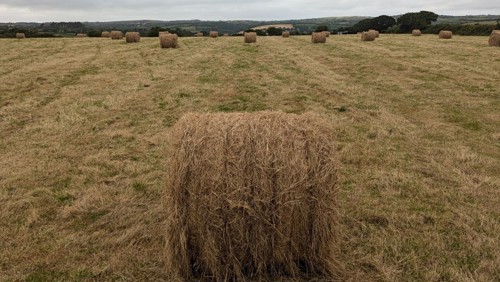
Six farmers in the South West of England compared sisal twine with their usual baling systems (plastic net wrap or plastic twine). Around 2,500 bales were made using sisal, alongside control bales made using the farm’s standard method.
Bales were mainly hay, with some haylage, straw and silage. Both sisal and standard bales were stored and managed in the same way to ensure fair comparison.
The trial looked at:
- Ease of baling and handling
- Cost of production (including labour and machinery)
- Forage quality, through laboratory analysis
Farmers also recorded their experience of feeding, storage and disposal over the season.
Take Home Messages
Sisal twine can replace plastic in hay baling without reducing feed quality, and can be composted after use. Farmers found it practical to use in the right conditions, with potential handling benefits. However, it takes longer to bale and is currently more expensive. Machinery availability is a major barrier. Sisal works best for dry hay stored under cover, but is not suitable for silage systems. Trial it where you already use twine or have access to suitable balers.
Findings
Sisal performed well in practice, particularly in hay systems. Farmers reported little difference in handling
and, in some cases, preferred sisal as it slipped less and reduced snagging. Feed quality was broadly
comparable to plastic-wrapped bales, with no consistent negative impacts observed. The ability to compost sisal after use was seen as a clear advantage, removing the need to dispose of plastic waste.
However, using sisal required more time and care. Baling took around 40% longer due to slower wrapping and additional adjustments, and spools needed changing more frequently. Costs were higher overall, driven mainly by increased labour time rather than material cost alone.
There were also important system limitations. Sisal needs dry conditions and prompt storage; bales left in the field or exposed to moisture showed signs of rotting. It did not perform well in silage or haylage systems where plastic wrap is used, leading to poorer fermentation.
The biggest barrier to adoption was access to suitable machinery, as most modern balers in the UK are designed for net wrap rather than twine.
Recommendations
Sisal is worth trialling where conditions are suitable, particularly in
dry hay systems. Ensure bales are removed quickly from the field
and stored under cover to avoid rotting.
Consider whether you already use twine or have access to suitable
machinery, as this greatly affects feasibility. Factor in extra time for
baling when assessing costs.
Sisal works best as part of a wider approach to reducing plastic use
on farm. Growing demand and policy support could help reduce
costs and improve equipment availability.
Farmer Insight
"When I first started looking at how we could achieve this [fossil-free] on our own farm or even at a global scale I thought it wasn’t possible. Maybe we would only be able to achieve 20 percent. But after more research and travel I now believe going fossil free can work. There are so many opportunities from nitrogen fixation in plants replacing fertilisers, to the greening of transport on and off
farm” Stuart Oates, Innovative Farmers triallist.
For full details of the field lab including the final report, please visit: Plastic free Baling: Testing the impacts of bringing back sisal