Fiona and Dave Daley kindly hosted a successful on-farm knowledge exchange event in Cumbria, bringing together farmers, researchers and advisers to explore two key themes: Non-Chemical Bracken Management and Trees for Livestock Health – which can often be connected in regenerative agriculture. The day combined presentations with practical farm walks, allowing participants to see first-hand how different approaches are being applied on the ground.
The morning session focused on non-chemical bracken control. Robin Pakeman of the Hutton Institute presented findings from the first three years of the Innovative Farmers bracken management trials. Results from vegetation quadrats showed a significant reduction in both bracken frond height and density across the trial sites. Biodiversity monitoring data remains less conclusive at this stage, with only slight indications of changes in bird populations, based on the first 2 years of biodiversity data. As monitoring continues over the coming years, the long-term data from the eight established trial sites is expected to provide a clearer picture of changes in overall biodiversity.
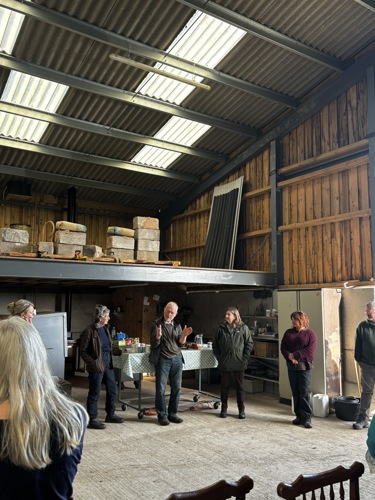
Drawing on their own experience, Fiona highlighted that noticeable improvements in biodiversity within managed bracken areas on their farm only began to emerge after around three years. This reinforced the importance of maintaining long-term monitoring to capture the full benefits of management interventions.
Andrew Chevin followed with a presentation on horse-drawn bracken rolling, sparking discussion on the range of control methods available for different landscapes. Participants considered approaches suited to steep slopes, rocky and uneven ground, and environmentally sensitive sites where conventional machinery may not be practical. There was discussion of mechanical management including robotic mowing and crimping.
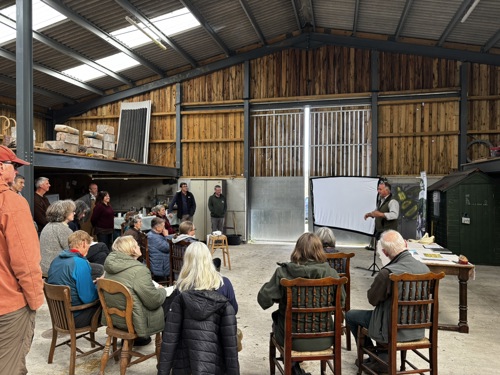
The conversations that followed explored some of the wider factors contributing to increased bracken encroachment in recent decades. Changes in stocking densities, labour availability and traditional land management practices were all discussed. Attendees reflected on how bracken was once routinely harvested for livestock bedding, helping to suppress its spread with the removal of brash. Examples were shared of where bracken continues to be used in this way today, including at the newer Innovative Farmers trial sites. Discussion followed on a number of topics such as using bracken to make compost, and the limited information on the potential risks associated with bracken's carcinogenic properties in water, and on its varying impact on ruminants and other different species such as horses and pigs.
Fiona and Dave then shared their eight-year journey of managing bracken on the farm and explained why they joined the Innovative Farmers trials. Their aim was to gather robust evidence to demonstrate the effectiveness of their management approach. Starting with extensive areas of dense, mature bracken on difficult rocky terrain, they developed a strategy centred on targeted cattle grazing. Participants were shown a backpack frame that had originally been used to carry hay flakes to remote areas, encouraging cattle to spend time in bracken-dominated locations where they would trample vegetation and create access.
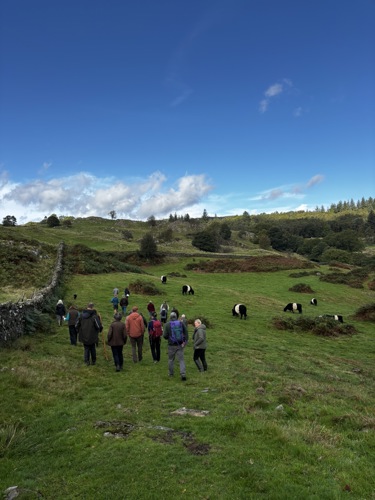
The morning farm walk provided an opportunity to see these results first-hand. Areas grazed by Belted Galloway cattle now support a predominantly grassy sward, with only remnants of bracken remaining. Participants compared plots managed using a combination of grazing and mechanical control with areas where cattle grazing alone had been used because the terrain was unsuitable for machinery.
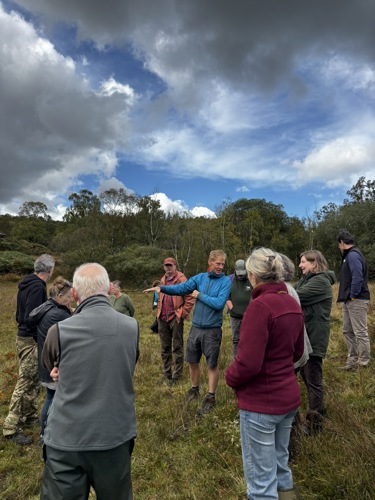
In the afternoon, attention turned to Trees for Livestock Health. The group visited a site where alder was encroaching onto a species-rich bog, prompting discussion about balancing habitat conservation with the wider benefits that carefully located trees can provide for livestock, biodiversity and farm resilience. Pete Leeson of the Woodland Trust and Tim Nicholson, a local farmer using trees for livestock and distributor of cactus guards for tree protection [Tree guard Cumbria, tree protector Cumbria - CACTUS tree guards, Cumbria, UK ] explored the role of trees within grazing systems, including practical considerations around tree establishment and protection.
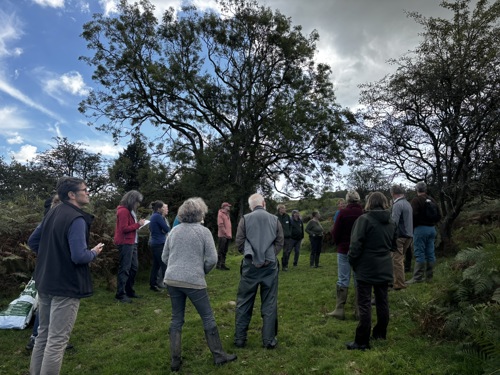
The day concluded back at the farm with a presentations from Bill Grayson and Liam McNulty, who shared their experiences and motivations for integrating trees into grazing systems. Their insights prompted further discussion on the opportunities for trees to enhance livestock welfare, diversify forage resources and contribute to more resilient farming landscapes.
The event highlighted the value of combining farmer experience with research evidence, providing participants with practical ideas and inspiration for managing both bracken and trees within livestock systems.
By Elly Archer, Learning Network Coordinator
Related news

18 June 2026
Nature friendly weed control
“Pigs have an advantage over other methods of bracken control”

23 July 2026
Animal welfare
Using trees to help livestock health

22 November 2024
Nature friendly weed control